


If your basement smells musty, feels heavy, or just seems unpleasant to spend time in, you are not imagining it. Many homeowners notice that basements feel “off” compared to the rest of the house, even when there is no visible water or obvious damage. The truth is, stale air buildup in basements is extremely common, and it is usually the result of how homes are built and how air naturally moves.
Understanding why this happens is the first step toward fixing it. More importantly, understanding how proper ventilation solves the problem can help you protect your health, your comfort, and your home long-term.
Why basements are naturally prone to stale air
 Basements sit at the lowest point of your home, and that position works against them when it comes to air quality. Air movement in houses is not random. Warm air rises, cool air sinks, and moisture follows predictable paths.
Basements are typically:
Below ground level
Surrounded by soil
Built with concrete walls and floors
Poorly ventilated by design
These conditions make basements ideal places for stagnant air to collect and linger.
Limited natural airflow
Most basements have few windows, and many have none at all. Even when windows are present, they are often kept closed for security, energy efficiency, or comfort. Without a steady source of fresh air coming in and stale air going out, air simply sits there.
Opening a window once in a while might help temporarily, but it does not create consistent airflow. Once the window is closed, the stale air quickly returns.
Cool temperatures slow air movement
Basements are cooler than upper levels of the home. Cooler air is heavier and does not circulate easily. While warm air upstairs moves naturally, basement air tends to stay trapped unless it is actively moved.
This lack of circulation allows odors, moisture, and airborne particles to accumulate over time.
Moisture plays a major role in stale basement air
Even if your basement has never flooded, moisture is almost always present to some degree. Concrete is porous, meaning it allows water vapor to pass through. Soil surrounding your foundation constantly holds moisture, and that moisture slowly migrates inward.
Humidity feeds musty smells
When moisture levels rise, even slightly, it creates an environment where musty odors develop. These smells are not just unpleasant, they are a warning sign that air is not being refreshed.
Humidity also makes air feel heavier and harder to breathe, which is why basements often feel uncomfortable even when temperatures are reasonable.
Mold does not need visible water
Many homeowners assume mold only grows after major leaks or flooding. In reality, mold can grow in basements with nothing more than:
Consistently high humidity
Poor air circulation
Organic materials like wood framing or stored items
Once mold spores become airborne, they contribute directly to stale, unhealthy air.
How stale basement air spreads to the rest of the house
One of the biggest misconceptions about basement air quality is that it stays in the basement. In reality, air moves upward through a home due to a natural phenomenon often called the stack effect.
As warm air rises and escapes through the upper levels of the house, it pulls air from below to replace it. That means basement air, including moisture, odors, and airborne contaminants, is constantly being drawn into living spaces.
If your basement air is stale, the rest of your home is breathing it too.
This is why homeowners often notice:
Persistent odors upstairs
Allergy symptoms with no clear cause
A general feeling that indoor air is not fresh
Why fans and dehumidifiers are not complete solutions
Many people try to fix stale basement air with portable fans or dehumidifiers. While these tools can help in specific ways, they do not address the core problem.
Fans move air but do not replace it
A fan can circulate air within the basement, but it does not remove stale air or bring in fresh air. You are essentially stirring the same air around, not improving its quality.
Dehumidifiers control moisture, not air quality
Dehumidifiers are excellent at lowering humidity levels, and they can reduce musty smells indirectly. However, they do not remove airborne pollutants or introduce fresh oxygen-rich air.
In many basements, homeowners find themselves emptying dehumidifier tanks constantly while the air still feels stale. That is because moisture control alone is not enough.
How proper basement ventilation actually fixes the problem
True ventilation means replacing stale air with fresh air in a controlled, continuous way. Instead of relying on occasional airflow, proper ventilation works quietly in the background to keep air moving and balanced.
Continuous air exchange
A dedicated basement ventilation system removes stale, moisture-laden air and replaces it with fresh outdoor air. This exchange prevents air from becoming trapped and eliminates the conditions that allow odors and contaminants to build up.
Over time, homeowners notice that the basement simply smells neutral. There is no mustiness to manage because it never has the chance to develop.
Balanced humidity and improved comfort
By removing humid air before it accumulates, ventilation helps maintain healthier humidity levels naturally. This reduces the strain on dehumidifiers and can even allow some homeowners to stop using them altogether.
The result is a basement that feels lighter, fresher, and more comfortable year-round.
The health benefits of eliminating stale basement air
Stale air is more than a comfort issue. It can affect how you feel every day.
Poor basement air quality has been linked to:
Increased allergy symptoms
Respiratory irritation
Headaches and fatigue
Worsening asthma conditions
When basement air is properly ventilated, airborne irritants are removed before they can spread throughout the home. Many homeowners report better sleep, fewer allergy issues, and an overall improvement in how their home feels.
Why ventilation is especially important for finished basements
Finished basements are often used as living rooms, bedrooms, home offices, or play areas. Unfortunately, finishing a basement without addressing air quality can trap problems behind walls and ceilings.
 Drywall, carpeting, and furniture all absorb moisture and odors. Without ventilation, these materials can hold onto stale air and slowly release it back into the space.
Proper ventilation protects:
Building materials
Furniture and stored items
The health of people using the space daily
A long-term solution, not a temporary fix
One of the biggest advantages of a professionally designed ventilation system is consistency. You do not have to remember to turn it on, empty tanks, or open windows at the right time.
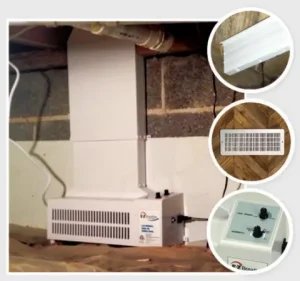
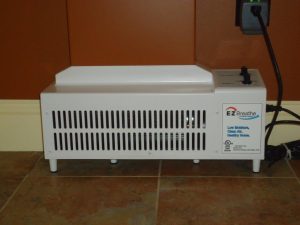
Systems like the EZ Breathe Ventilation System are designed specifically for basements and crawl spaces. They work continuously, quietly, and efficiently to prevent stale air from ever becoming a problem again.
Instead of reacting to odors and humidity, you prevent them altogether.
Fresh air changes how your home feels
Homeowners often underestimate how much air quality affects their daily comfort. When stale basement air is eliminated, the entire home benefits. Spaces feel cleaner, fresher, and more inviting.
If your basement has always felt uncomfortable or unpleasant and you cannot quite explain why, stale air is likely the reason. Proper ventilation does not just improve the basement. It improves how your whole home breathes.
Final thoughts
Stale air in basements is not a personal failing or a maintenance oversight. It is a natural result of how homes are built and how air behaves. The good news is that it is completely fixable.
With proper ventilation, basements can become clean, healthy spaces rather than problem areas. Fresh air, consistent airflow, and moisture control working together make all the difference.
If your basement air has never felt quite right, it may be time to stop masking the symptoms and start addressing the root cause.