
Many homeowners think of the basement as a separate space, almost disconnected from the rest of the house. If it smells musty or feels damp, the assumption is often that closing the door keeps the problem contained. Unfortunately, air does not work that way.
What happens in your basement rarely stays there. In fact, the air in your basement plays a quiet but powerful role in the air your family breathes every day.
The basement is the starting point for your home’s air
Your basement sits at the lowest point of your home, and that position matters more than most people realize. Air is constantly moving throughout a house, even when everything feels still.
As warm air rises and escapes through the upper levels, it creates a subtle vacuum that pulls air upward from below. This natural movement means basement air is regularly drawn into living areas, bedrooms, and even upper floors.
If that air is stale, humid, or contaminated, it becomes part of your home’s breathing cycle.
Why closing the basement door does not solve the problem
It is a common belief that keeping the basement door shut blocks odors and poor air. While a closed door may reduce smells temporarily, it does not stop airflow entirely.
 Air moves through:
Wall cavities
Floor joists
Stairwells
Utility openings
Gaps around doors and ductwork
This is why musty odors often seem to appear upstairs without a clear source. The basement air is finding its way up, whether you notice the path or not.
The subtle signs your basement air is affecting your home
Poor basement air quality does not always announce itself loudly. Instead, it often shows up in small, frustrating ways that are easy to overlook.
You might notice:
Persistent odors that return after cleaning
Allergy symptoms that worsen indoors
Air that feels heavy or stale
Increased dust accumulation
Headaches or fatigue with no clear explanation
These issues may not seem connected to the basement at first, but they often are.
Moisture makes the problem travel faster
Basement air tends to be more humid than air upstairs. When humid air rises, it carries odors and airborne particles with it.
Moisture also clings to building materials, allowing smells and contaminants to linger longer. Over time, this can affect:
Carpeting and furniture
Curtains and fabrics
HVAC systems
Stored items throughout the home
What started as a basement issue slowly becomes a whole-home comfort problem.
Why HVAC systems cannot fix basement air problems alone
Many homeowners assume their heating and cooling system handles air quality everywhere. While HVAC systems circulate air, they are not designed to remove stale air from basements.
In fact, HVAC systems often pull basement air into the system and redistribute it. That means poor basement air quality can be spread more evenly throughout the house.
Without addressing the source, the system simply moves the problem around.
Finished basements increase the impact
When a basement is finished, the stakes are even higher. Finished spaces are meant to be lived in, not avoided.
 However, drywall, carpeting, and furniture can trap moisture and odors. Without proper ventilation, these materials slowly absorb poor air and release it back into the space over time.
This can lead to:
Lingering smells that never fully go away
Reduced comfort in living areas above
Premature wear on finishes and furnishings
A finished basement without good air quality often feels uncomfortable, no matter how well it is decorated.
How improving basement air improves the entire home
The good news is that the reverse is also true. When basement air quality improves, the entire home benefits.
Fresh, properly ventilated basement air means:
Fewer odors traveling upstairs
Lower overall humidity levels
Cleaner air circulating through the house
Improved comfort in every room
Homeowners often notice these changes gradually, but once they do, it is hard to ignore how much better the home feels.
Ventilation addresses the root of the issue
True improvement comes from addressing the source of stale air, not just masking symptoms. Basement ventilation works by continuously removing old air and replacing it with fresh outdoor air.
This prevents moisture, odors, and airborne pollutants from building up in the first place. Instead of managing problems after they appear, ventilation stops them before they spread.
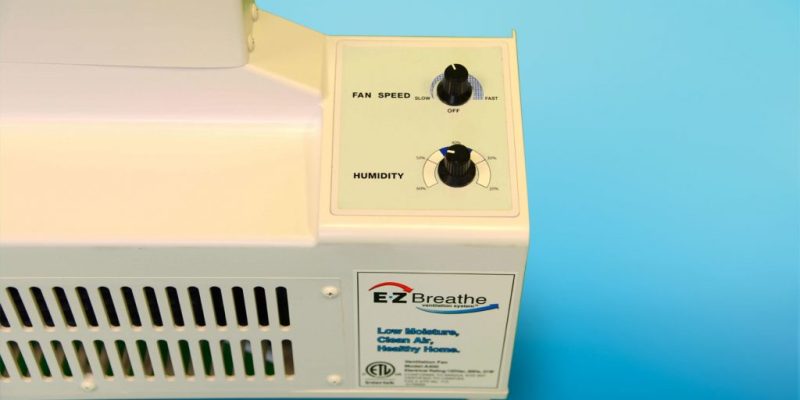
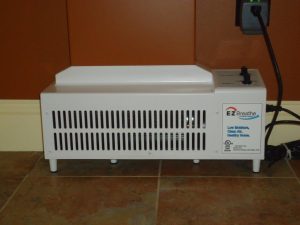
Systems like the EZ Breathe Ventilation System are designed specifically for below-grade spaces. They work quietly and consistently, without relying on homeowner intervention.
A healthier home starts from the bottom up
It is easy to focus on visible living spaces when thinking about comfort and health. But the foundation of your home, literally and figuratively, plays a major role in how your home feels.
By improving basement air quality, you are not just making one room more comfortable. You are improving the air your entire household breathes.
Final thoughts
Poor basement air quality is rarely just a basement problem. Because air moves upward and throughout the home, issues below ground often show up everywhere else.
If your home never quite feels fresh, even after cleaning and maintenance, the basement may be the missing piece. Addressing basement air quality through proper ventilation can create a noticeable difference, one that makes your entire home feel healthier, cleaner, and more comfortable every day.

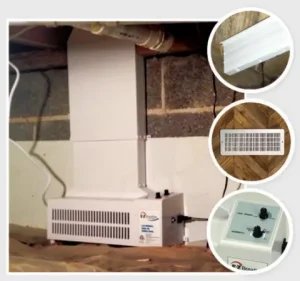 Basements sit at the lowest point of your home, and that position works against them when it comes to air quality. Air movement in houses is not random. Warm air rises, cool air sinks, and moisture follows predictable paths.
 Drywall, carpeting, and furniture all absorb moisture and odors. Without ventilation, these materials can hold onto stale air and slowly release it back into the space.
 In winter, basements often show:
 Use kitchen and bathroom exhaust fans regularly


 Persistent dampness in your basement can be a serious issue, leading to a variety of problems, including structural damage and health issues.