


Mold is one of the most persistent and misunderstood problems homeowners face in basements. Many people believe that mold only appears after visible water damage or flooding, but in reality, mold can develop slowly and quietly in damp, poorly ventilated spaces, long before obvious signs appear.
While cleaning visible mold or running a dehumidifier may offer temporary relief, these approaches often fail to prevent mold from returning. Long-term mold prevention requires addressing the conditions that allow it to grow in the first place. This is where continuous basement ventilation plays a critical role.
Why Basements Are Naturally Prone to Mold
Basements create ideal conditions for mold growth due to a combination of environmental factors.
Constant Exposure to Moisture
Basement walls and floors are in direct contact with surrounding soil, which holds moisture year-round. Even without leaks, moisture can slowly migrate through foundation materials.
Cooler Temperatures
Cooler air holds less moisture, which can lead to condensation on walls, pipes, and surfaces. These damp areas provide perfect breeding grounds for mold.
Poor Air Circulation
Many basements have little to no airflow. Without ventilation, moist air becomes trapped, allowing humidity levels to remain elevated for long periods.
Organic Materials
Wood framing, cardboard boxes, fabrics, and dust all provide organic material that mold can feed on when moisture is present.
Together, these factors make basements especially vulnerable to mold growth if not properly managed.
Why Mold Keeps Coming Back After Cleanup
 One of the most frustrating experiences for homeowners is seeing mold return after it has been cleaned or treated. This happens because surface-level solutions don’t change the environment that caused the mold.
Common short-term approaches include:
Scrubbing visible mold
Using antimicrobial sprays
Running a portable dehumidifier
While these methods may remove or reduce visible growth, they do not eliminate excess moisture or stagnant air. Mold spores can remain airborne or hidden in materials, ready to grow again when conditions allow.
Without addressing airflow and moisture together, mold prevention remains incomplete.
The Role of Moisture and Air Stagnation in Mold Growth
Mold requires three things to grow: moisture, organic material, and time. Air stagnation accelerates the process.
When air does not circulate, moisture lingers on surfaces and in the air. This creates consistently damp conditions, even if humidity readings appear acceptable at times. Over weeks or months, these conditions allow mold colonies to establish and spread.
Preventing mold long-term means disrupting this cycle by removing damp air and replacing it with fresh air continuously.
How Continuous Basement Ventilation Changes the Environment
Continuous ventilation works by actively exhausting stale, moisture-laden air from the basement and introducing fresh air in a controlled way. This ongoing exchange transforms the basement environment.
Key benefits include:
Reduced moisture accumulation
Improved air circulation
Faster drying of damp surfaces
Less opportunity for mold to establish
Unlike intermittent solutions, ventilation operates consistently, preventing conditions from reaching mold-friendly levels.
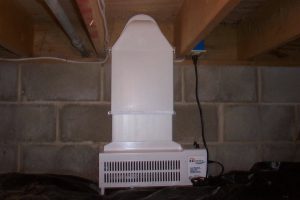
Systems such as EZ Breathe are designed specifically to provide this type of continuous airflow in below-grade spaces.
Why Ventilation Is More Effective Than Dehumidification Alone
Dehumidifiers focus solely on removing moisture from the air. While this can be helpful, it does not address stagnant air or airborne mold spores.
Ventilation, on the other hand:
Removes moisture before it settles
Reduces spore concentration by exhausting air
Prevents odor buildup associated with mold
Improves overall air freshness
By replacing air instead of recycling it, ventilation offers a more comprehensive approach to mold prevention.
Long-Term Mold Prevention vs Short-Term Fixes
Short-term solutions often react to mold after it appears. Long-term prevention focuses on maintaining an environment where mold struggles to survive.
Continuous ventilation supports long-term prevention by:
Keeping humidity more stable
Preventing damp air from lingering
Reducing reliance on temporary treatments
Supporting healthier indoor air conditions year-round
This proactive strategy helps homeowners avoid repeated cleanup, repairs, and frustration.
How Basement Ventilation Protects the Entire Home
Mold issues rarely stay confined to the basement. Due to natural air movement, basement air travels upward into the rest of the home. When basement conditions improve, so does air quality throughout living spaces.
Preventing mold in the basement can help:
Reduce musty odors upstairs
Improve overall indoor air freshness
Support healthier breathing environments
Protect finishes, furniture, and stored belongings
In this way, basement ventilation contributes to whole-home protection, not just basement comfort.
When Continuous Ventilation Makes the Most Sense
 Continuous basement ventilation is especially beneficial in homes with:
Recurring mold or mildew issues
Persistent musty odors
High humidity despite dehumidifier use
Finished or partially finished basements
Limited natural airflow
In these situations, ventilation addresses the root causes rather than symptoms.
Why Professional Ventilation Solutions Matter
Not all ventilation systems are designed for basements. Professional-grade systems are engineered to handle below-grade moisture conditions and operate quietly and efficiently.
Proper installation ensures consistent airflow without creating drafts or disrupting indoor comfort. These systems are designed for long-term use and minimal maintenance, making them a reliable solution for mold prevention.
Final Thoughts
Preventing basement mold requires more than cleaning surfaces or lowering humidity temporarily. It requires changing the environment that allows mold to grow.
Continuous basement ventilation provides a proactive, long-term solution by removing damp, stagnant air and replacing it with fresh air day after day. By improving airflow and moisture control together, homeowners can significantly reduce the risk of mold returning.
When basement conditions improve, the entire home benefits, making continuous ventilation one of the most effective strategies for protecting indoor air quality and long-term comfort.