indoor-air-pollution-ez-breathe-3

Main Causes Of Indoor Air Pollution

Main Causes Of Indoor Air Pollution

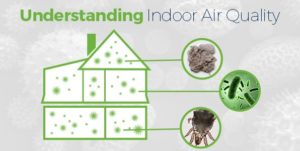
The quality of indoor air inside offices, schools, and other workplaces is important not only for workers’ comfort but also for their health. Poor indoor air quality (IAQ) has been tied to symptoms like headaches, fatigue, trouble concentrating, and irritation of the eyes, nose, throat, and lungs. Also, some specific diseases have been linked to specific air contaminants or indoor environments, like asthma in damp indoor environments. In addition, some exposures, such as asbestos and radon, do not cause immediate symptoms but can lead to cancer after many years.

indoor-air-pollution-ez-breathe-1

Many factors affect IAQ. These factors include poor ventilation (lack of outside air), problems controlling temperature, high or low humidity, recent remodeling, and other activities in or near a building that can affect the fresh air coming into the building. Sometimes, specific contaminants like dust from construction or renovation, mold, cleaning supplies, pesticides, or other airborne chemicals (including small amounts of chemicals released as a gas over time) may cause poor IAQ.

The right ventilation and building care can prevent and fix IAQ problems. Although OSHA does not have IAQ standards, it does have standards about ventilation and standards on some of the air contaminants that can be involved in IAQ problems. OSHA responds to questions about standards with letters of interpretation. OSHA’s letters of interpretation specifically addressing IAQ issues can be found in Other Resources. The General Duty Clause of the OSH Act (the law that created OSHA) requires employers to provide workers with a safe workplace that does not have any known hazards that cause or are likely to cause death or serious injury.indoor-air-pollution-ez-breathe-2

Indoor air quality (IAQ) is a concern in many schools due in part to the age and poor condition of a number of school buildings. School IAQ is particularly important as it may affect the health, performance and comfort of school staff and students.

Managing IAQ in schools presents unique challenges. Unlike managing other buildings, managing schools involves the responsibility for public funds and child safety issues. In addition, occupants are close together. Typical schools have approximately four times as many occupants as office buildings with the same amount of floor space. Schools frequently have a large number of heating, ventilating, and air-conditioning equipment, which places added strain on maintenance staff. As schools add space, the operation and maintenance of each addition are often different. Schools sometimes use rooms, portable classrooms, or buildings that were not originally designed to service the unique requirements of schools.

Contact the Professionals at EZ Breathe Today! 866-822-7328

Would You Live In Your Basement?

Ask yourself this question: “Would you live in your basement?” Your answer is probably a hard “NO!” Basements are notorious for being “icky”–damp, musty, and full of spiders.

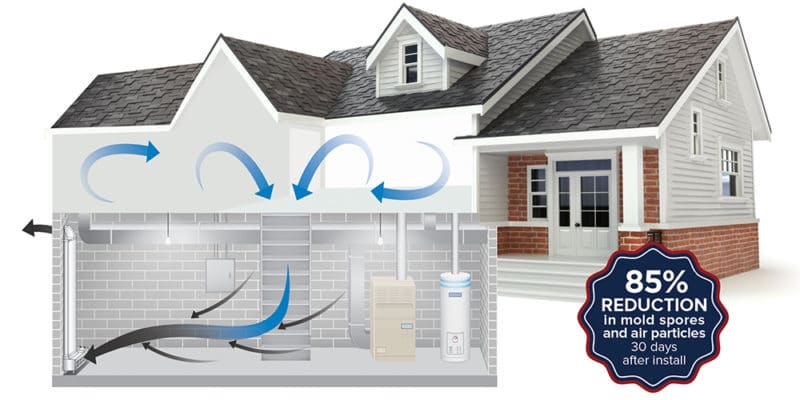
Did you know that the air from your basement may be exactly what you’re breathing all day, every day? This is due to stack effect, the process of warm air rising upward in a building. (This is because warm air is lighter than cold air.) Stack effect will cause the air to flow from a basement into living spaces upstairs, bringing airborne pollutants–mold, moisture, radon, chemicals–right along with it.

So if you’re lining up the home improvement projects for the coming summer months, think about starting where it matters most: in the basement!

Healthy Air Starts at the Bottom

How to make your basement, and your home, healthier:

  1. Manage the moisture. Improve exterior drainage to prevent water from leaking into your basement. Manage indoor humidity levels below 60% to prevent condensation.
  2. Test your home for radon. Install systems to reduce the radon if the test result is above EPA-recommended acceptable levels.
  3. Clean. Accumulated dust and dirt can trap moisture and grow mold. Throw away unwanted items–especially old paints, chemicals, and pesticides.
  4. Evict Pests. Trap unwanted visitors: ants, mice, rats, squirrels.
  5. Weatherize. insulating and air sealing your basement can reduce the impact of stack effect and save you energy dollars too!
  6. Ventilate. Below grade spaces require ventilation to exhaust harmful chemicals, toxins, allergens and to create air exchanges for a safe and healthy air quality.


Learn More About Moisture Control

Learn More About Basement Ventilation

Learn More About Crawlspace Ventilation

Important Questions Regarding Indoor Air Quality

Important Questions Regarding Indoor Air Quality New York, NY


How do air fresheners affect indoor air quality?

Air fresheners can impact indoor air quality by adding potentially hazardous pollutants to the air. The use of air fresheners is associated with elevated levels of volatile organic compounds (VOCs), such as formaldehyde, acetaldehyde, benzene, toluene, ethyl benzene, and xylenes, in indoor air. These VOCs are often difficult to smell in the air, but they can irritate the eyes, nose, and throat, as well as cause headaches and nausea. The types and amounts of VOCs emitted depend primarily on the fragrance composition of the air freshener, not on the type of air freshener. It can be difficult or impossible to find out the ingredients in air fresheners, because manufacturers are not required to disclose the complete list of ingredients.Indoor Air Quality | New York, NY | EZ Breathe Ventilation System

Air fresheners can add VOCs and other pollutants to the air through direct emissions from fresheners as well as through secondary reaction products from the freshener chemicals reacting with constituents (such as ozone) that are already in the air. For example, air freshener emissions can react with naturally-occurring indoor air compounds, such as ozone, to produce secondary pollutants such as formaldehyde. The types and amounts of secondary pollutants produced are influenced by factors such as air freshener ingredients, concentrations, and product usage.

How do air fresheners affect human health?

The use of air fresheners can increase exposure levels to air pollutants. These exposures, even at relatively low levels, have been associated with a range of adverse health effects. These effects may include migraine headaches, asthma attacks, breathing and respiratory difficulties, dermatitis, and neurological problems particularly for sensitive individuals.

Are “green” air fresheners safer or better than regular ones?

Some air freshener products are described as “green” (or other related terms, such as organic or all-natural), but these terms lack regulatory or chemical definitions when used with air fresheners. Studies comparing emissions of different types of air fresheners have found that all air fresheners – regardless of “green” claims – emit potentially hazardous compounds. Moreover, emissions from “green” air fresheners were not found to be significantly different from other fresheners.

Homemade or “natural” air fresheners made with essential oils are not necessarily free of potentially harmful chemicals, either. Essential oils consist of combinations of naturally-derived chemicals that are highly concentrated. Concentrations of these oils in nature are typically much lower than the concentrations found in essential oils. Moreover, few of these oils and plant-based ingredients have been tested for safety, and some can trigger allergic reactions.Indoor Air Quality | New York, NY | EZ Breathe Ventilation System

Can air fresheners remove odors and clean the air?

Some air fresheners purportedly clean the air by removing odors, disinfecting the air, or reducing allergens. These claims have been difficult to scientifically verify. Moreover, the use of these products would not provide a long-term solution since the source of odors, bacteria, or other allergens would not be addressed.

What are some alternatives to using air fresheners?

Air fresheners are generally used to create a more pleasing indoor air environment, but they can also exacerbate indoor air quality problems by adding more chemicals to the air. 


Contact the Professionals at EZ Breathe Ventilation System Today! 866-822-7328

basement-ventilation-ez-breathe-3

Indoor Air Quality: 4 Key Benefits of a Good Ventilation System

Indoor Air Quality: 4 Key Benefits of a Good Ventilation System

Indoor air quality denotes the quality of the air within and around homes and other habitable buildings, especially with respect to the health and well-being of the people who occupy the building. Being aware of and controlling some of the common pollutants in the indoor environment can help you reduce the risk of indoor health problems.Indoor Air Quality | Nashville, TN | EZ Breathe Ventilation System

You can achieve good indoor air quality when you have a proper ventilation system in your building. Ventilation is the process by which clean air from the outdoor environment is purposely supplied into a given space as stale air is simultaneously removed.

There are many types of ventilation systems that you can use to improve the quality of your indoor air. Here is a look at some of the key benefits that you get by investing in a good ventilation system.

  1. Impurity Control

You may be of the view that the quality of air that you breathe outdoors isn’t great, particularly if you live in a busy city. But in most cases, the air within a building can be more contaminated than the air that is outside.

Good ventilation systems are designed to help you remove any build-up of different types of pollutants, moisture, bacteria and unpleasant odors from your building.

  1. Regulation of Air

If you don’t have a good ventilation system in your house, you cannot control the air that flows into the building. When too much air flows into your house, it can mean high energy bills due to increased heating or cooling requirements. This is where a good ventilation system comes in handy.Indoor Air Quality | Nashville, TN | EZ Breathe Ventilation System

A good ventilation equipment will help you control the flow of air into your building while also regulating the air to ensure that it meets the necessary health and safety standards.

  1. Helps Solve Condensation and High Moisture Issues

Condensation inside your house can lead to notable problems such as growth of mold, wood rot, and discoloration of various surfaces. Mold spores and high moisture in the air can also lead to poor indoor air quality and numerous health problems. Therefore, at all costs, you will want to avoid condensation and a high moisture content in your indoor air.

The good thing about investing in good ventilation systems is that the system will help you control the amount of moisture in your indoor air.

  1. Temperature Control

Buildings that are occupied by many people can become hot and stuffy over time. A good ventilation system helps regulate the temperature of a space to ensure that the occupants of the space work in a well-ventilated and more comfortable environment.   

Contact the Professionals at EZ Breathe Ventilation System Today! 866-822-7328

Indoor Air Quality | New York, NY | EZ Breathe Ventilation System

4 Tips to Improve Indoor Air Quality and Make Your Home Allergy-Proof

4 Tips to Improve Indoor Air Quality and Make Your Home Allergy-Proof

The indoor air quality of your home influences the health of the members of your household. It is therefore important to do all you can to keep allergens and disease causing agents at a minimum. The following are some measures you can take to make your home allergy-proof and keep your family healthy no matter the season.Indoor Air Quality | New York, NY | EZ Breathe Ventilation System

  1. Invest in a whole home ventilation system

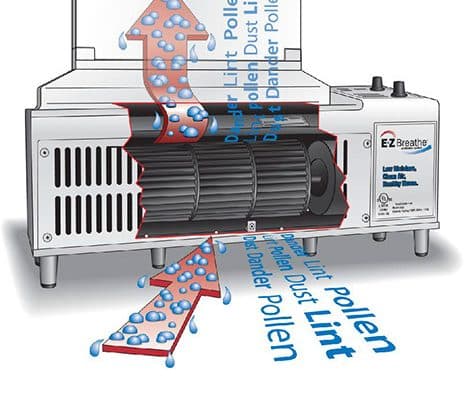
This is one of the most effective ways to improve indoor air quality. A whole home ventilation system circulates air in and out of your home. It expels stale and contaminated air from the inside of your home and draws fresh air into the home from the outside. This gets rid of airborne allergens that may have built up in the air within your home. These systems filter air coming into the home to prevent allergens from the outside from coming into your home.

  1. Change your air filters more regularly

HVAC systems that aren’t maintained circulate allergens within the home. This is because dirty filters prevent these systems from trapping allergens in the air. The systems may even blow allergens off the dirty filters into the air. It is important to change your air filters regularly. This will help to improve indoor air quality and prevent re-circulation of allergens in the air.

  1. Control humidity levels

High levels of humidity can result in a wide variety of problems. Dust mites and mold thrive in humid environments. Low humidity levels can result in dry skin as well as respiratory problems. If you want to keep your home healthy and allergy free, it’s important to keep the humidity levels in your home at a healthy level. Whole home ventilation systems can help you do this. Some people invest in dehumidifiers or humidifiers depending on their needs.  Indoor Air Quality | New York, NY | EZ Breathe Ventilation System

  1. Bring air-purifying plants into your home

Allergens such as mold spores and dust mites aren’t the only cause of respiratory problems. Chemical air pollutants in your home such as formaldehyde can also cause respiratory problems. Air-purifying plants such as the Snake plant will help to reduce the levels of these pollutants in the air. They will also provide you with the added benefit of using up carbon dioxide and introducing more oxygen into the air within your home.

Polluted indoor air can put the health of the members of your household at risk. Consider the tips above to improve indoor air quality and ensure your home is allergy-proof throughout the changing seasons.

Contact the Professionals at EZ Breathe Ventilation System Today! 866-822-7328

Can Paint Really Be “Low VOC” & “No VOC”?

This is a question many ask themselves and not just indoor air quality geeks like me.  Many homeowners, contractors and consumers have been wondering about this too. Here is what I tell them…

What is a VOC?  It stands for Volatile Organic Compounds, or carbon-based chemicals of which there are thousands and thousands that easily evaporate into the air and become part of the air quality. Harmful VOCs are not always toxic, but they do have compounding long-term health effects. VOCs can cause headaches, nausea, inability to concentrate and even damage to livers, kidneys. Studies in schools & workplaces have shown a correlation between air quality with high levels of VOCs and lower productivity in workers and students.


“Low VOC” & “No VOC” Paint? In the chemical industry, Low VOC is used to describe a product with VOC content at or below 150 g/L, Ultra-low-VOC products have VOC content that’s below 50 g/L.  Zero-VOC paints typically contain VOC content of less than 5 grams per liter. However, paints in any of these categories will change once you choose the color.  The chemicals used to create the color often contain large amounts of VOCs. So, now you no longer have a low or no VOC paint. The chemicals in the color additive modifies the base paint, not only in its appearance but significantly in its VOC load as well.

What’s the big difference between VOC content & VOC emissions? These are two different descriptors and are rarely ever the same. Contrary to what we would think, a study by UL proved many times, even paints with less VOC content had high VOC emissions into the air.  They concluded that there was no way to predict a paint’s VOC emission level or “off-gassing” amount from the VOC content level.  Companies will often utilize whichever of the two levels are less, then use that number to advertise their low or no VOC paint, when in fact they do not qualify. 

Types of VOCs matter? Sure do. The US government defines these parameters based on VOC amounts.  However, these VOC amounts only reference the specific VOCs on the government’s watch list (my term).  If a VOC exists but isn’t on the Government’s list of VOCs to watch, then there is no limit to the amount that can go into a paint.  In other words, there only needs to be a low amount of the listed, or watched, VOC – not ALL VOCs. Many a company’s introduction of new VOCs outpaces the government’s ability to monitor in a timely way.

Why should I care?  We have been referred to as the “indoor generation” as most North American’s spend 90% of our time indoors – at work, at school and in our homes. We are constantly bombarded with thousands of VOCs on the daily with new VOCs begin discovered all the time. VOCs are harmful for our health for us to breathe. With so much new building, remodeling and upgrading of our indoor spaces these last few years, its important to consider the effect this has on our indoor air environment and our health and safety. Good news is there are strategies to help minimize the concentration of indoor VOCs and maintain a healthy and safe indoor air environment.

– Andre’ Lacroix
V.P. EZ Breathe Healthy Home Solutions, V.P. Basement Health Association, Certified Healthy Homes Specialist, Certified Indoor Environmentalist, Certified Radon Measurement Provider

Indoor Air Quality | Macedonia, OH | EZ Breathe

Easy Ways to Improve Indoor Air Quality

Easy Ways To Improve Indoor Air Quality

The average American spends 90 percent of their time indoors. That means that you spend most of your time breathing indoor air. According to a study by the Environment Protection Agency (US EPA), indoor air quality for the average home is much worse than outdoor air quality. The EP reports that the levels of pollutants in homes are 2 to 5 times higher than that in outdoor air. Some pollutants recorded high levels of 100 times more indoors than outdoors. Indoor Air Quality | Macedonia, OH | EZ Breathe

While spending more time outdoors is a great idea for our overall health, it doesn’t solve the problem of high levels of pollutants in our homes. The good news is that you can improve your indoor air quality with the following easy steps.

  1. Keep your home ventilated

One of the easiest ways to reduce the levels of pollutants in the air within your home is to open your windows and doors. This will allow air to circulate into and out of your home. Good exchange of air will promote healthy air indoors.

  1. Smoke outdoors

If you or a member of your household likes to indulge in cigarette smoking every once in a while, restrict the activity to the outdoors. Cigarette smoking is not only bad for your health as a smoker but also for the other members of your household. Second hand smoke has been attributed as the cause of up to 3000 deaths a year as a result of developing lung cancer.Indoor Air Quality | Macedonia, OH | EZ Breathe

Dust mites and mold love moisture. Mold spores and dust mites are known to cause allergies or increase allergy episodes. Keeping humidity levels low will help to reduce the levels of mold and dust mites in your home. Consider investing in a dehumidifier for those parts of your home that are especially humid such as the basement or crawlspace.

  1. Bring in plants

Plants offer an easy and inexpensive way to purify your air. These natural air purifiers take in stale indoor air that is full of chemicals and release fresh oxygen rich air into your home. Placing a large number of plants in your home will help to ensure your indoor air is cleaner. Be sure to look for plants that are known for air purification such as spider plants, Aloe Vera and mother in-laws tongue.

Are you looking for ways to improve indoor air quality? Try the tips above to get started right away.

Contact the Professionals at EZ Breathe today! 866-822-7328

Indoor Air Quality | Macedonia, OH | EZ Breathe Ventilation System

Why Indoor Air Quality Has Such A Big Impact On Your Health

Why Indoor Air Quality Has Such A Big Impact On Your Health

As our homes and workplaces become increasingly well sealed, it may seem like we are shutting pollution out. But research shows that we are actually shutting pollutants in. Whether we are sleeping, cooking, cleaning or working, we now spend 90% of our time indoors, breathing potentially dirty air. Our research suggests that the level of Volatile Organic Compounds (VOCs) and Nitrogen Dioxide (NO2) are rising in people’s homes. Indoor Air Quality | Macedonia, OH | EZ Breathe Ventilation System

The term Indoor Air Quality, or IAQ, refers to the air quality in and around our homes and workplaces. Indoor air pollution can negatively affect Indoor Air Quality and can lead to immediate and long-term effects on a person’s health and wellbeing.

Understanding the sources of indoor air pollution and how they relate to the overall Indoor Air Quality can help improve living and working environments and potentially benefit your overall health.

What are the effects of indoor air pollution

The effects of indoor air pollution can typically be separated into two categories:

Short-term effects include mild to severe eye and respiratory system irritation, headaches, nausea, shortness of breath and dizziness. These effects can be reminiscent of allergy symptoms or the flu. Asthma sufferers and those with pre-existing lung conditions are much more susceptible to the short-term effects of indoor air pollution.

Long-term effects can range from respiratory and heart diseases to lung cancer. These more serious health problems can occur after extended exposure to ambient indoor air pollution, but can also appear after repeated, though less frequent exposure to contaminated spaces.

How can Indoor Air Quality be improved?

When it comes to Indoor Air Quality and its long- and short-term effects on our health, the stakes are high. Thankfully, there are several steps you can take to reduce indoor air pollution and improve the Indoor Air Quality in your home.Indoor Air Quality | Macedonia, OH | EZ Breathe Ventilation System

Ensure adequate ventilation

Kitchens can be especially problematic spaces for mold and VOCs related to combustion because of heating elements. Be sure that your cooking area is properly vented. Throughout the rest of your home, open windows whenever possible to improve airflow and regularly examine and replace filters in your heating and cooling systems.

Clean regularly

While we have already noted that many household cleaning products can be as potentially harmful as they are helpful, it is still important to clean your home regularly and thoroughly. Learn about the common VOCs found in cleaning products and read labels carefully to determine if the cleaning products you are using meet your standards. An indoor air quality professional should be able to assist you in identifying a solution to remedy the potential bad air in your home!

Contact the Professionals at EZ Breathe Ventilation System Today! 866-822-7328

Indoor Air Pollution | Nashville, TN | EZ Breathe

How Cooking In Your Kitchen Causes Pollution In Your Home

How Cooking In Your Kitchen Causes Pollution In Your Home

People use a variety of heat sources to cook food, including gas, wood, and electricity. Each of these heat sources can create indoor air pollution during cooking. Natural gas and propane stoves can release carbon monoxide, formaldehyde and other harmful pollutants into the air, which can be toxic to people and pets. Using a wood stove or fireplace to cook can result in high levels of indoor air pollution from wood smoke. Indoor Air Pollution | Cleveland, OH | EZ Breathe

Cooking can also generate unhealthy air pollutants from heating oil, fat and other food ingredients, especially at high temperatures. Self-cleaning ovens, whether gas or electric, can create high levels of pollutants as food waste is burned away. Exposure to these can cause or worsen a wide range of health problems such as nose and throat irritation, headaches, fatigue and nausea. Young children, people with asthma and people with heart or lung disease are especially vulnerable to the harmful effects of indoor air pollution.

Studies show that air can be unhealthy to breathe when people cook in kitchens with poor ventilation. The best way to ventilate your kitchen is to use a properly-installed, high efficiency range hood over your stove. A high efficiency range hood has a high cubic feet per minute (cfm) rating and a low sones (noise) rating. If you have a gas stove, a qualified technician should inspect it every year for gas leaks and carbon monoxide.

Ways to improve ventilation in your kitchen

If you have a range hood:

  1. Check to make sure it vents to the outdoors.
  2. Use it while cooking or using your stove
  3. Cook on the back burners, if possible, because the range hood exhausts this area more effectively.

If you don’t have a range hood:

  1. Use a wall or ceiling exhaust fan while cooking.
  2. Open windows and/or exterior doors to improve air flow through the kitchen. Indoor Air Pollution | Cleveland, OH | EZ Breathe

The above article provides information about the types of pollutants that can be emitted during cooking and their potential health impacts. You can also learn ways to improve the air quality in your home.

Contact the professionals at EZ-Breathe Ventilation Systems today! 1-866-822-7328