

Do you or your family members wake up with chronic morning congestion, itchy eyes, or unexplained asthma flare-ups? While many homeowners attribute indoor allergies to pet dander or outdoor pollen, the true culprit is often hiding directly beneath their feet. Elevated basement humidity creates an ideal breeding ground for biological contaminants, which then circulate throughout the entire home.
Understanding the direct link between below-grade dampness, microscopic allergen populations, and poor indoor air quality (IAQ) is the first step toward creating a healthier living space. Here is how subterranean moisture fuels allergen triggers—and why continuous mechanical ventilation is the most effective way to eliminate them.
The Connection Between Basement Moisture and Upper-Level Allergies
It is easy to assume that what stays in the basement stays in the basement, but building physics proves otherwise. Through a process known as the “stack effect,” warm air in your home naturally rises and exits through upper levels and the attic. As this air escapes, it creates a negative pressure draw that pulls air upward from your foundation.
In fact, up to 50% of the air you breathe on your main living floor originates in your basement or crawl space. When below-grade spaces harbor dampness and stagnant air, microscopic allergens and airborne fungal spores are drawn directly into your primary living quarters, bedrooms, and HVAC ductwork.
Biological IAQ Triggers Thriving in Below-Grade Spaces
High relative humidity (above 50% to 60%) creates an ideal environment for two major biological indoor air triggers:
1. Dust Mites
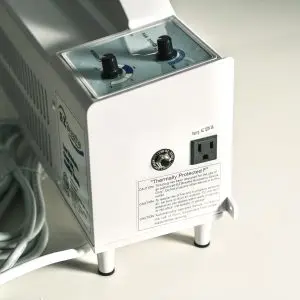
Dust mites are microscopic arachnids that represent one of the leading causes of year-round indoor allergies and asthma. Unlike insects, dust mites cannot drink water; instead, they absorb moisture directly from humid ambient air. When relative humidity in a basement or crawl space stays above 50%, dust mite populations multiply rapidly inside carpets, upholstered furniture, and stored fabric items.
2. Mold Spores and Microbial VOCs (mVOCs)
Damp concrete foundation walls and floor joists provide the organic material and moisture mold needs to flourish. As fungal colonies grow, they release microscopic airborne spores alongside microbial volatile organic compounds (mVOCs). These off-gassing compounds produce that distinct, earthy “musty basement odor” and cause persistent nose, throat, and eye irritation.
Why Surface Cleaning and Portable Units Fall Short
When faced with musty odors and allergy symptoms, homeowners often turn to temporary surface fixes that fail to address the root cause:
- Chemical Air Fresheners & Sprays: These products merely mask odors with synthetic fragrances, adding artificial VOCs to your air without removing underlying mold spores or moisture.
- Stand-Alone Air Purifiers: While HEPA purifiers filter airborne dust in immediate areas, they do not lower humidity levels or stop dust mites from multiplying in your foundation framing.
- Compressor Dehumidifiers: Portable dehumidifiers extract water vapor from stagnant air, but they continuously recirculate existing biological pollutants without expelling toxic gases, mVOCs, or airborne spores.
The Mechanical Solution: Continuous Floor-Level Air Exchange
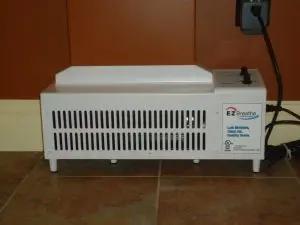
To eliminate musty smells and eradicate dust mite populations permanently, you must address heavy, stagnant air where it accumulates. Because damp air, soil gases, and mold spores are heavier than clean air, they settle in the bottom 18 inches of your foundation.
A continuous ventilation system, such as an EZ Breathe unit, mounts near the floor level to actively pull this heavy, contaminated air out of the home and exhaust it directly outdoors. As stale air is removed, clean, dry, conditioned air from upper living levels is drawn downward to replace it.
By achieving 6 to 10 full air turnovers daily, continuous air exchange keeps subterranean relative humidity below 50%—desiccating dust mite colonies, stopping mold growth, and permanently eliminating musty odors at the source.
Frequently Asked Questions
Can high basement humidity really trigger allergy symptoms upstairs?
Yes. Due to the stack effect, airborne dust mite debris, mold spores, and damp air from your basement naturally rise into upper living quarters and bedrooms through floor penetrations and HVAC return ducts.
What relative humidity level prevents dust mites from surviving?
Keeping indoor relative humidity consistently below 50% halts dust mite reproduction and causes existing populations to dry out and die off.
Is a mechanical ventilation system better than a standard basement air purifier?
Yes. Air purifiers merely filter particles from trapped, stagnant air. A mechanical ventilation system continuously exhausts polluted, moisture-laden air completely outdoors while drawing in fresh, conditioned air.
Protect Your Family’s Health and Indoor Air Today
Don’t let hidden basement dampness and dust mite allergens compromise your health. Upgrade to an energy-efficient, zero-maintenance ventilation solution engineered to keep your entire home dry and odor-free.
Contact EZ Breathe today at (866) 822-7328 to schedule your free Indoor Air Quality Evaluation!