

An attached garage can be one of the most useful spaces in your home—and one of the easiest places for moisture, odors, and airborne pollutants to build up.
Wet vehicles bring rain and snowmelt indoors. Concrete floors can remain damp. Tools and equipment may begin to corrode. At the same time, vehicles, gasoline, paints, solvents, pesticides, fertilizers, and other stored products can release odors and volatile organic compounds (VOCs).
When the garage shares walls, ceilings, or an entry door with your living space, those problems may not stay in the garage.
The short answer: controlling an attached garage requires more than simply drying the air. Continuous garage ventilation helps remove humid, stale, and contaminated air outdoors while reducing the pressure-driven movement of garage air into the home.
Why Do Attached Garages Develop Moisture and Air Quality Problems?
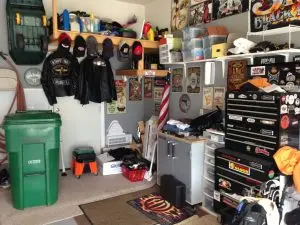
Most garages are not conditioned like bedrooms, kitchens, or living rooms. They often have limited mechanical air exchange even though homeowners regularly introduce moisture and pollutants into the space.
Common sources include:
- Rainwater and snowmelt from vehicles
- Damp concrete floors
- Outdoor humidity entering when the garage door opens
- Gasoline-powered lawn equipment
- Vehicle exhaust
- Paints, solvents, pesticides, fertilizers, and cleaners
- Stored fuel and other chemical products
Once the overhead door closes, moisture, odors, and pollutants can remain trapped.
Over time, that stagnant environment can contribute to condensation, musty odors, rust on metal tools and equipment, and poor garage air quality.
How Does Garage Moisture Cause Rust and Corrosion?
Rust develops when metal is exposed to moisture and oxygen. Garages can create favorable conditions for corrosion because temperature and humidity change frequently.
For example, a wet or cold vehicle brought into a warmer garage can introduce significant moisture. As that water evaporates, humidity increases. Temperature differences can also cause condensation to form on colder metal surfaces.
Repeated exposure can affect:
- Hand and power tools
- Bicycles
- Lawn equipment
- Garage door hardware
- Vehicle components
- Metal shelving
- Electrical contacts and equipment
If you regularly notice condensation, musty odors, damp floors, or rust appearing on stored tools, poor moisture management may be part of the problem.
Can Garage Fumes and Odors Enter an Attached Home?
Yes. An attached garage is separated from the living space, but air can still move through small openings and pressure differences.
Potential pathways include:
- Gaps around the door leading into the house
- Utility penetrations
- Electrical outlets
- Plumbing or wiring openings
- Shared wall and ceiling penetrations
- Cracks and imperfect air seals
Pressure differences within a home can encourage garage air to move toward adjacent living spaces. That means odors and airborne contaminants produced in the garage may contribute to indoor air quality problems beyond the garage itself.
This is one reason attached garage ventilation should address both moisture and contaminated air—not humidity alone.
Signs Your Garage May Need Better Ventilation
You may benefit from improved garage air exchange if you notice:
- Persistent gasoline or chemical odors
- A musty smell after the garage door has been closed
- Condensation on windows, doors, walls, or tools
- Rust developing quickly on equipment
- Damp cardboard boxes or stored belongings
- Lingering vehicle exhaust odors
- Odors near the interior garage entry
- High humidity that returns after temporary ventilation
These symptoms often indicate that moisture or pollutants are accumulating faster than they can escape.
Garage Ventilation vs. Dehumidifier: Which Is Better?
The best solution depends on the source of the problem.
| Garage Moisture Control Method | How It Works | Moisture | Fumes & VOCs |
|---|---|---|---|
| Opening the garage door | Temporarily increases passive airflow | Temporary help | Temporary help |
| Portable dehumidifier | Condenses water vapor from recirculated air | Good for humidity | Does not exhaust pollutants |
| Portable or basic exhaust fan | Moves air out of one area | Variable | Variable |
| Dedicated mechanical garage ventilation | Continuously exhausts stale garage air outdoors | Helps control buildup | Actively removes contaminated air |
A dehumidifier can be useful when excessive humidity is the primary concern. However, it recirculates the same indoor air and does not provide the same contaminant removal as mechanical exhaust ventilation.
For attached garages dealing with moisture, odors, VOCs, and air transfer into the home, continuous air exchange provides a more comprehensive approach.
How Does Mechanical Garage Ventilation Work?
A dedicated garage ventilation system continuously removes stale, humid, and contaminated air from the garage and exhausts it outdoors.
This creates ongoing air exchange rather than waiting for humidity or odors to become noticeable.
The process can help:
- Remove humid garage air. Moist air is exhausted before it can remain trapped for long periods.
- Reduce pollutant buildup. Vehicle odors, VOCs, and other airborne contaminants have a path outdoors.
- Limit pressure-driven air transfer. Exhausting garage air can help reduce the movement of contaminated air toward the connected living space.
- Protect stored belongings. Better moisture management can reduce conditions that contribute to rust, corrosion, and damp storage.
- Improve overall garage air quality. Instead of masking odors, ventilation continually replaces stale air.
How the EZ Breathe Garage Ventilation System Helps
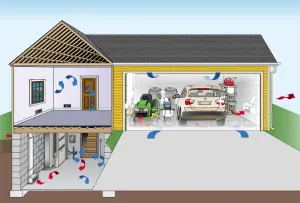
The EZ Breathe Garage Ventilation System is designed specifically to create continuous air exchange in garages.
Rather than simply circulating garage air, the system exhausts contaminated air outdoors and allows replacement air to enter the space.
For homeowners dealing with a combination of garage humidity, rust, chemical odors, and attached-garage air quality concerns, this approach tackles multiple problems at the same source.
Potential benefits include:
- Continuous garage air exchange
- Moisture and humidity management
- Reduced lingering odors
- Removal of airborne pollutants
- Reduced conditions that contribute to rust
- Quiet, energy-efficient operation
- Minimal maintenance
The goal is not simply to make the garage smell better. It is to keep moisture and contaminated air from continually accumulating in the first place.
Can Garage Ventilation Help Prevent Rust?
Ventilation cannot reverse corrosion that has already occurred, but controlling excess moisture can make the garage less favorable for continued rust formation.
For the best protection, combine ventilation with basic moisture-control practices:
- Dry standing water after wet vehicles enter
- Repair water intrusion around doors or walls
- Keep gutters and exterior drainage functioning properly
- Avoid storing wet cardboard directly on concrete
- Seal obvious air and water leaks
- Monitor garage humidity with a hygrometer
- Ventilate the space consistently
The important difference is consistency. Opening the garage door occasionally may temporarily improve conditions, but moisture and pollutants can begin building again as soon as the space is closed.
Is Garage Ventilation Important for Indoor Air Quality?
It can be especially important when the garage is attached to the house.
Cars, fuel, lawn equipment, paints, cleaners, solvents, and other products can introduce pollutants that you would not intentionally store in bedrooms or living rooms.
Continuous garage ventilation helps address those contaminants at their source before they have as much opportunity to migrate toward occupied areas.
However, garage ventilation should always complement—not replace—basic safety practices.
Never run or idle a gasoline-powered vehicle in a closed garage, even if a ventilation system is operating. Homes with attached garages should also have properly installed and maintained carbon monoxide alarms according to applicable safety recommendations and local requirements.
Frequently Asked Questions About Garage Moisture and Ventilation
What causes excessive moisture in a garage?
Common causes include wet vehicles, rain or snowmelt, damp concrete, poor drainage, outdoor humidity, water intrusion, and insufficient air exchange. Temperature changes may also lead to condensation on colder surfaces.
Will ventilation reduce humidity in a garage?
Ventilation can help by exhausting humid garage air and preventing moisture from remaining trapped. Its effectiveness depends partly on outdoor conditions and the source of the moisture. Persistent leaks or drainage problems should also be corrected.
Can a dehumidifier stop garage fumes?
No. A dehumidifier primarily removes water vapor from recirculated air. It does not provide dedicated exhaust for vehicle odors, VOCs, or other airborne garage contaminants.
Can garage humidity cause tools to rust?
Yes. Persistent moisture and condensation create conditions that encourage corrosion on steel tools, equipment, hardware, bicycles, and vehicle components.
Why do fumes from my garage smell inside the house?
Air can move from an attached garage into living areas through gaps around doors, wall penetrations, utility openings, and other leakage pathways. Pressure differences within the home can increase this air movement.
Should I leave my garage door open to reduce moisture?
Opening the overhead door may provide temporary ventilation, but it is not a reliable long-term moisture-control strategy. Outdoor humidity, weather, pests, and security concerns can also make leaving the door open impractical.
What is the best solution for garage moisture and fumes?
If your garage has both excessive humidity and pollutant or odor problems, dedicated mechanical garage ventilation provides a more comprehensive solution because it continually exhausts stale air rather than simply recirculating it.
Keep Moisture, Rust, and Garage Air Problems Under Control
A damp garage can damage tools and stored belongings. A poorly ventilated attached garage can also allow odors and contaminated air to affect the rest of the home.
Instead of treating rust, humidity, and fumes as separate problems, continuous air exchange addresses the environment that allows all three to build up.
Learn more about the EZ Breathe Garage Ventilation System or schedule your Free Indoor Air Quality Evaluation to find out whether improved ventilation is right for your garage.
You can also speak with an EZ Breathe specialist at (866) 822-7328.