Why Crawlspace Encapsulation Fails Without Active Mechanical Ventilation
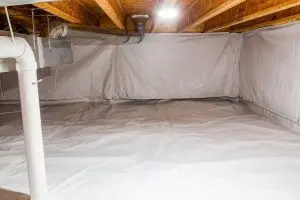
Crawlspace encapsulation has exploded in popularity over the last decade, and for good reason. For years, traditional building practices left these subterranean spaces open to the elements, resulting in a never-ending battle against dirt, pests, and ambient humidity. Today, many homeowners invest thousands of dollars to line their crawlspaces with heavy, bright white plastic vapor barriers, effectively sealing the space off from the raw earth below. It feels like the ultimate home improvement win. However, many homeowners are shocked to discover that months after a costly encapsulation job, their crawlspace still smells musty, the air feels heavy, and structural dampness persists. The truth is simple: encapsulation is only step one. Without active mechanical ventilation, a sealed crawlspace can quickly transform into a stagnant, humid microclimate that puts your home at risk.
The Encapsulation Myth: Creating a Stagnant “Aquarium” Effect
The core philosophy behind crawlspace encapsulation is isolation. By covering the dirt floor and sealing up foundation walls, you prevent external groundwater vapor from migrating into the structure. While this is an excellent barrier strategy, it introduces a new physical challenge: it creates an airtight container beneath your feet.
A home is a dynamic environment. Moisture still finds a way inside through minor foundation wall cracks, plumbing leaks, or humid air slipping down from the living spaces above. When moisture enters a perfectly sealed, unventilated box, it has nowhere to escape. Instead of evaporating or dispersing, the trapped moisture continuously recycles within the space. Over time, the relative humidity climbs, creating a stagnant “aquarium effect” that works directly against your home’s structural health.
The Dangerous Consequences of a Humid, Sealed Crawlspace
When an encapsulated crawlspace lacks a mechanism to exhaust air, relative humidity levels regularly spike above 60%. This high-humidity threshold triggers several destructive secondary problems that can compromise the comfort and safety of your entire house.
Accelerated Subterranean Wood Rot and Mold Growth
Mold and wood-decaying fungi do not need a lot of encouragement to grow; they simply require an organic food source (like your wooden floor joists and sill plates) and consistent moisture. In an unventilated crawlspace, ambient humidity settles directly onto the cool wooden structural framing. Once the wood moisture content climbs, mold spores colonize the surfaces, quietly eating away at the structural timber that supports your first-floor flooring.
Soggy Insulation and Falling Batts
Many crawlspaces feature fiberglass batt insulation installed between the floor joists. Fiberglass behaves exactly like a sponge when exposed to high ambient humidity. As the insulation absorbs trapped vapor from the stagnant air, it becomes incredibly heavy. Eventually, the weight causes the insulation batts to pull away from the subfloor, sag, and tear out completely, leaving your floors cold in the winter and ruining your home’s energy efficiency.
Why Passive Crawlspace Vents and Standard Fans Over-Promise
When confronted with a damp encapsulated space, some turn back to traditional passive vents or cheap retail box fans. This is a fundamental mistake in building science. Opening passive foundation vents during warm seasons allows hot, humid air to rush into a cool crawlspace environment, hitting its dew point instantly and turning into liquid condensation on your walls.
Similarly, standard hardware store fans merely churn the existing, contaminated air around the room. They do not possess the static pressure required to overcome the heavy, low-settling vapor boundaries where damp air pools. They run up your monthly electrical utility bills while doing absolutely nothing to refresh the actual air volume of the structure.
The Engineering Solution: Paired Encapsulation and Mechanical Air Exchange
To truly solve crawlspace moisture problems, you must replace stagnant air with clean, conditioned air. This requires a dedicated mechanical air exchange system designed to work alongside your vapor barrier.
A high-performance mechanical ventilator—like the EZ Breathe system—creates a controlled, continuous air cycle. Instead of adding a high-wattage compressor to your utility bill, the system mounts directly to the crawlspace wall, targeting the lowest, dampest 18 inches of the room where heavy chemical vapors, gases, and moisture naturally pool. It draws this toxic, wet air out and exhausts it completely outside the home. This action creates a slight, safe negative pressure, pulling down dry, conditioned air from the upper living levels of your home. Operating continuously at a meager 31 watts, it maintains a safe relative humidity level below 55% year-round without breaking your budget.
Frequently Asked Questions About Crawlspace Encapsulation
Q: Why does my crawlspace still smell musty after encapsulation?
A: Encapsulation blocks ground moisture, but it cannot remove humidity that enters through foundation walls, plumbing leaks, or normal air movement. Without active ventilation or humidity control, moisture becomes trapped inside the sealed crawlspace, leading to musty odors and poor indoor air quality.
Q: What is the ideal humidity level for an encapsulated crawlspace?
A: Most building science experts recommend maintaining a relative humidity between 45% and 55%. Keeping humidity below this range helps prevent mold growth, wood rot, condensation, and damage to floor joists and insulation.
Q: Does crawlspace encapsulation eliminate the need for ventilation?
A: No. Encapsulation reduces moisture entering from the soil, but it does not remove moisture already present in the air. Mechanical ventilation or controlled air exchange is often necessary to keep humidity levels stable throughout the year.
Q: Is a dehumidifier better than a crawlspace ventilation system?
A: It depends on the home’s conditions. Dehumidifiers remove moisture from the air but require regular maintenance and consume more electricity. Mechanical air exchange systems continuously replace stale, humid air with fresher conditioned air while using significantly less energy. Many homes benefit from combining encapsulation with active ventilation for long-term moisture control.
Q: Why do floor joists still develop mold after crawlspace encapsulation?
A: Mold can still grow if humidity remains high inside the sealed crawlspace. Condensation forms on cooler wood surfaces, creating the moisture mold needs to grow. Managing humidity—not just sealing the space—is essential for protecting structural framing.
Q: Should a crawlspace ventilation system run all the time?
A: Yes. Moisture migration, seasonal humidity changes, and the stack effect occur continuously. Running a properly designed mechanical ventilation system year-round helps maintain consistent humidity levels, reduces odors, and protects your home’s structural components from excess moisture.
Suggested Next Steps
Encapsulation is one of the best investments you can make to protect your crawlspace, but it works best as part of a complete moisture management system. If your crawlspace still has musty odors, elevated humidity, condensation, or signs of mold after encapsulation, additional air management may be needed to protect your home’s structure and indoor air quality.
The EZ Breathe Ventilation System is designed to work alongside crawlspace encapsulation by continuously removing damp, stagnant air and helping maintain healthy humidity levels year-round. By pairing encapsulation with active mechanical ventilation, homeowners can better protect floor joists, insulation, and indoor air quality while reducing the risk of mold and wood rot.
If you’re considering crawlspace improvements or want to maximize the performance of your existing encapsulation system, contact the EZ Breathe team to discuss the best solution for your home. An indoor air quality specialist can evaluate your crawlspace and recommend the right moisture-control strategy for long-term protection.
Manage Consent
To provide the best experiences, we use technologies like cookies to store and/or access device information. Consenting to these technologies will allow us to process data such as browsing behavior or unique IDs on this site. Not consenting or withdrawing consent, may adversely affect certain features and functions.
Functional Always active
The technical storage or access is strictly necessary for the legitimate purpose of enabling the use of a specific service explicitly requested by the subscriber or user, or for the sole purpose of carrying out the transmission of a communication over an electronic communications network.
Preferences
The technical storage or access is necessary for the legitimate purpose of storing preferences that are not requested by the subscriber or user.
Statistics
The technical storage or access that is used exclusively for statistical purposes.The technical storage or access that is used exclusively for anonymous statistical purposes. Without a subpoena, voluntary compliance on the part of your Internet Service Provider, or additional records from a third party, information stored or retrieved for this purpose alone cannot usually be used to identify you.
Marketing
The technical storage or access is required to create user profiles to send advertising, or to track the user on a website or across several websites for similar marketing purposes.