

That unmistakable, earthy odor waiting for you at the bottom of the stairs isn’t just a cosmetic nuisance—it is a clear warning sign from your home’s ecosystem.
The Anatomy of a Musty Basement Smell
Many homeowners accept a damp, stale lower level as an unavoidable reality of owning a house with a basement. They clean the floors, light scented candles, and run retail air fresheners, only to find the scent returns within hours. To solve the problem, you have to understand what you are actually smelling.
The classic “musty basement” odor is not just old, stagnant air. It is the chemical byproduct of active microbial growth. Specifically, you are breathing in Microbial Volatile Organic Compounds (mVOCs). These are strong-smelling gases released by mold, mildew, and airborne bacteria as they consume organic materials like drywall, wooden framing, carpet fibers, and cardboard boxes under the right environmental conditions.
The 3 Main Reasons Moisture Gets Trapped Below-Grade
Microbes cannot thrive without moisture. Because basements are built below the ground level, they are structurally vulnerable to water accumulation in ways that upper living spaces are not. Three core factors keep your basement damp:
- Concrete Porosity and Hydrostatic Vapor Pressure: Concrete looks solid, but it is actually a highly porous, sponge-like material. Ground moisture surrounding your foundation pushes against the walls via hydrostatic pressure. Water vapor migrates straight through the concrete block, evaporating into your basement air and driving up the indoor relative humidity.
- The Lack of Natural Airflow: Upper floors benefit from open windows, interior cross-breezes, and solar warming. Basements are enclosed, dark concrete boxes with little to no natural air circulation, meaning any moisture that enters stays trapped.
- Internal Moisture Contributors: Everyday appliances complicate the issue. Unsealed sump pump wells, washing machines, clothes dryers, and uninsulated cold water pipes that sweat during humid weather all dump excess water vapor into an already saturated room.
Why Traditional Retail Dehumidifiers Often Fail to Stop the Odor
When a musty smell develops, the standard homeowner response is to buy a portable, compressor-based dehumidifier from a local hardware store. While these units do pull liquid water out of the air, they rarely solve a systemic odor problem because of three structural flaws:
- The Recirculation Trap: A standard dehumidifier acts like a localized band-aid. It draws air in, cools it to drop the moisture, warms it back up, and blows the exact same air mass back into the room. It extracts water molecules, but it does absolutely nothing to filter out or expel the airborne mVOCs, mold spores, or chemical toxins. You are simply spinning and heating dirty, stale air.
- Maintenance Fatigue: Portable units rely on human intervention. If the drain bucket fills up while you are at work, the internal float switch triggers, shutting the machine off entirely. Moisture levels instantly spike again. Furthermore, the standing water in uncleaned reservoir trays frequently becomes a breeding ground for slimy bacterial biofilms.
- Spiking Monthly Electrical Costs: Standard retail dehumidifiers are energy hogs. Running a heavy, high-amperage cooling compressor cycle continuously can easily add $30 to $50 or more to your monthly utility bill.
The Permanent Fix: Active Mechanical Air Exchange Ventilation
To eliminate the musty odor permanently, you must change the physics of the room. True moisture management is not about drying stagnant air; it is about exchanging it.
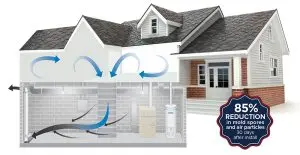
An active mechanical air-exchange ventilation system completely transforms your home’s air profile. Because damp air, radon gas, and heavy toxins naturally settle in the lowest 18 inches of a room, these dedicated units pull stale, heavy air directly off the basement floor and exhaust it completely outside your home’s building envelope.
By constantly expelling this contaminated bottom air column, the system creates a gentle negative pressure zone. This safely draws cleaner, drier, conditioned air down from your upper living levels. This continuous air turnover deprives mold and mildew of the stagnant environment they need to survive, eliminating the root cause of the musty odor while operating on roughly 40 watts of power—saving you significantly on monthly energy bills compared to heavy-duty dehumidifiers.
Frequently Asked Questions About Musty Basements

Can a musty basement smell make you sick?
Yes. The musty odor is a direct warning sign of mold and bacterial growth. Breathing in these airborne particles and mVOCs can trigger chronic respiratory issues, asthma attacks, persistent sinus headaches, fatigue, and severe allergy symptoms for sensitive individuals, even if they spend most of their time on the upper floors. Will scrubbing concrete walls with bleach permanently remove the musty smell?
No. Bleach only sanitizes surface mold on non-porous materials. Because concrete is porous, mold roots remain alive deep within the foundation walls. Unless you fix the underlying lack of ventilation and continuous dampness, the active mold growth and its associated odors will return within days. How often should the air in a basement be completely exchanged?
For optimal structural preservation and indoor health, EPA and ASHRAE guidelines suggest home air should be refreshed or completely exchanged multiple times a day. Passive foundation vents and standard home HVAC systems rarely achieve this required turnover in enclosed below-grade basements.
Stop Masking the Smell—Fix the Root Cause
Don’t let a damp basement compromise your family’s health and your home’s structural integrity. Contact our indoor environmental specialists today to request a comprehensive Indoor Air Quality Consultation and see how a maintenance-free ventilation system can permanently protect your investment.