Stop Crawlspace Wood Rot: The Homeowner’s Guide to Structural Ventilation
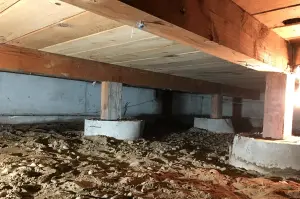
For many homeowners, the crawlspace is a “set it and forget it” area of the house. However, this dark, narrow void beneath your feet is the most critical environment for the structural integrity of your entire property. When moisture levels rise, the wooden skeleton of your home—the floor joists, beams, and subflooring—becomes a breeding ground for wood-decay fungi. If left unaddressed, wood rot can lead to sagging floors, compromised foundations, and thousands of dollars in structural repairs. Understanding how to stop crawlspace wood rot through mechanical structural ventilation is the key to preserving your home’s value and your family’s health.
The Silent Threat: How Moisture Erodes Your Home’s Foundation
Wood rot is not a sudden event; it is a biological process that requires three ingredients: oxygen, a food source (wood), and moisture. Since we cannot remove the oxygen or the wood from your home’s structure, the only variable we can control is moisture. In a typical crawlspace, moisture enters from the exposed earth, through foundation walls, or as humid air entering through traditional passive vents.
When the relative humidity in a crawlspace consistently exceeds 70%, wood-decay fungi begin to colonize. These organisms literally “eat” the cellulose and lignin that give wood its strength. Over time, the once-sturdy floor joists become soft and “punky,” losing their ability to support the weight of the home above. This is why a damp crawlspace is more than just a nuisance; it is a direct threat to the foundation of your investment.
Signs of Moisture Damage in Your Crawlspace
Identifying the problem early is essential to preventing total structural failure. Homeowners should regularly inspect their crawlspaces for these specific indicators of excessive moisture.
Condensation on Pipes and Ductwork
If you see “sweating” on your cold water pipes or HVAC ducts, it is a clear sign that the dew point in your crawlspace is too high. This standing moisture eventually drips onto your wooden floor joists, accelerating the rotting process.
Visible Mold on Floor Joists
Mold and wood rot often go hand-in-hand. White, fuzzy growth or dark staining on the sides of your wooden beams indicates that the moisture levels are high enough to support microbial life. While mold destroys air quality, the rot that follows destroys the wood itself.
Buckling or “Springy” Floors Upstairs
When the support structure beneath your feet begins to fail, you will feel it in the living area. Floors that feel bouncy or look uneven are often the final warning sign that wood rot has progressed into significant structural damage.
Why Encapsulation Alone Isn’t Enough: The Need for Air Exchange
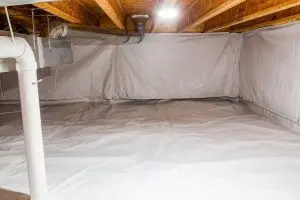
Many homeowners are told that “encapsulation”—lining the crawlspace with plastic—is the only solution. While a vapor barrier is a helpful component, it does not solve the problem of stagnant air. In many cases, sealing a crawlspace without providing a mechanical way to exhaust air actually traps moisture against the wood, creating a “greenhouse effect” for rot.
The EZ Breathe approach focuses on mechanical structural ventilation. By actively exhausting the heavy, moisture-laden air and replacing it with drier air from the upper levels of the home, you create a dynamic environment where moisture cannot settle. This continuous air exchange is what keeps the wood “dry-to-the-touch,” making it impossible for wood-rot fungi to survive.
Protecting Property Value with Mechanical Ventilation
A home with a history of structural rot or persistent moisture issues is difficult to sell and expensive to insure. Installing a dedicated ventilation system like EZ Breathe is an investment in your home’s “resale readiness.” It provides proof to future buyers that the home is protected by modern building science. Furthermore, because the EZ Breathe unit operates for only pennies a day, it provides a much higher ROI than energy-hungry dehumidifiers that require constant maintenance and filter changes.
FAQ
Q: Can humidity in a crawlspace cause floors to squeak or sag?A: Yes. Excessive moisture softens the wood fibers in your joists. As they weaken, they begin to compress and shift under the weight of your furniture and footsteps, leading to squeaks, gaps in baseboards, and sagging.
Q: How does EZ Breathe protect a crawlspace better than a fan?A: Standard fans simply move air around. EZ Breathe creates a dedicated exhaust path that pulls the dampest, heaviest air from the lowest point of the home and expels it outside, creating a balanced pressure that prevents moisture buildup.
Q: Is crawlspace ventilation expensive to run?A: No. Unlike traditional dehumidifiers that can spike your electric bill by $30-$50 a month, an EZ Breathe system is highly efficient, typically costing only $2 to $4 per month to operate.
Manage Consent
To provide the best experiences, we use technologies like cookies to store and/or access device information. Consenting to these technologies will allow us to process data such as browsing behavior or unique IDs on this site. Not consenting or withdrawing consent, may adversely affect certain features and functions.
Functional Always active
The technical storage or access is strictly necessary for the legitimate purpose of enabling the use of a specific service explicitly requested by the subscriber or user, or for the sole purpose of carrying out the transmission of a communication over an electronic communications network.
Preferences
The technical storage or access is necessary for the legitimate purpose of storing preferences that are not requested by the subscriber or user.
Statistics
The technical storage or access that is used exclusively for statistical purposes.The technical storage or access that is used exclusively for anonymous statistical purposes. Without a subpoena, voluntary compliance on the part of your Internet Service Provider, or additional records from a third party, information stored or retrieved for this purpose alone cannot usually be used to identify you.
Marketing
The technical storage or access is required to create user profiles to send advertising, or to track the user on a website or across several websites for similar marketing purposes.